
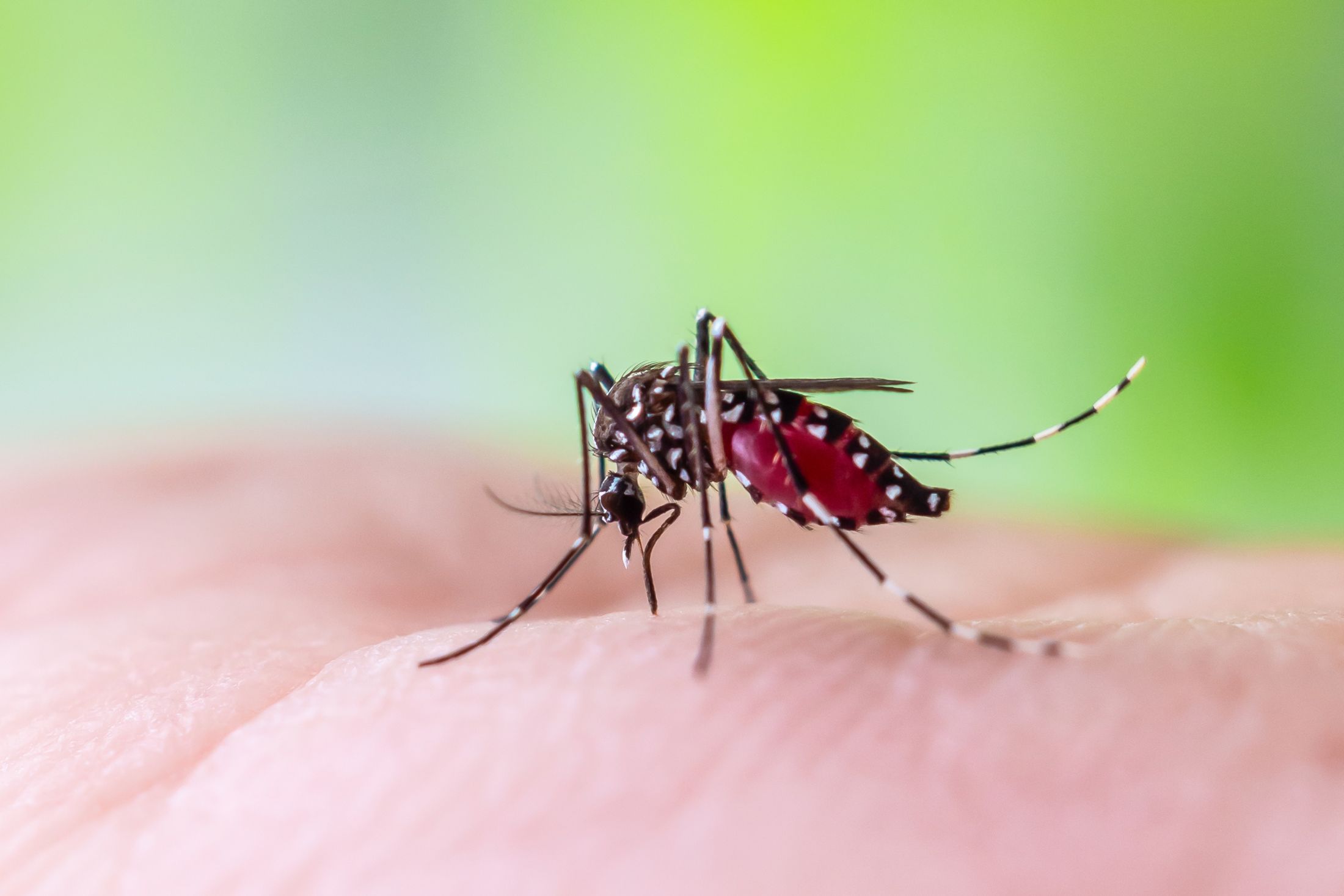
Saturday 25th April 2026 was World Malaria Day, and each year it falls with World Immunisation Week. This is particularly fitting since vaccines are at the very forefront of the fight against malaria, which continues to cause more than 600,000 childhood deaths every year. It gives us a chance to highlight a particular method of infection research that has a long history and yet continues to play an important role in the development of the latest malaria vaccines. We are talking about human challenge studies.
The deliberate infection of humans by exposure to infectious agents has been performed for over 300 years. Perhaps the most famous early example is that of Edward Jenner who used the infectious material of cowpox lesions to protect against the more lethal disease smallpox, essentially forming the basis of vaccination.1 Early examples of human challenge studies confirmed much of the emerging infection theory, but were often conducted without proper ethical consideration and at the exploitation of vulnerable groups.2 However, over the course of the 20th Century, the utility of human challenge studies as a valid research tool started to be increasingly recognised, and, crucially, it was demonstrated that these studies could be conducted within the remit of ethical principles and regulations.
Malaria has its own fascinating history with regards to human challenge. In the late 1890s - early 1900s, experiments involving the deliberate malaria infection of humans (often self-infection of the experimentalists themselves) provided insights into this complex pathogen in its formative years of discovery. The transmission of malaria from mosquitoes to a human volunteer was first demonstrated by Grassi and Bignami in 1898 in Italy.3-5 In 1900, Sir Patrick Manson felt compelled to repeat this experiment in a non-endemic setting to address the “endless objections” raised by “the amateur biologist and sanitarian” concerning the mosquito-malaria theory.6 Infected mosquitoes provided by Bignami and Bastianelli were shipped from Italy to London, arriving within 48 hours, and fed on two healthy volunteers, namely his 23 year old son Dr Patrick Thurburn Manson and Mr George Warren. Both developed malaria symptoms and evidence of peripheral parasitaemia within few days.
Another remarkable period of medical history subsequently followed in the form of malariotherapy for the treatment of neurosyphilis, or, as it was called at the time, general paralysis of the insane.7 Driven by the observation that “not rarely psychoses were healed through intercurrent infectious diseases”, the Austrian physician Julius Wagner-Jauregg explored induced fever as a treatment for general paralysis of the insane.8 Encouraged by initial attempts with tuberculin, he pursued more effective methods of inducing fever and ultimately settled on using malaria as the treatment of choice. In 1917, he inoculated (subcutaneously) a selection of neurosyphilis patients with blood from a soldier with benign tertiary malaria. Of the 200 patients initially treated by Wagner-Jauregg, 50 patients demonstrated complete remission and returned to work, most at the occupation of their “former calling”.8 The practice of malariotherapy for the treatment of neurosyphilis quickly became widespread with many tens of thousands of patients treated across the world. At the time, malariotherapy offered the “best, perhaps the only, chance of recovery” for patients with neurosyphillis.9 An estimated 17,000 patients underwent malariotherapy treatment at Horton hospital in Sussex alone over a 40 year period before the practice was ultimately discontinued with the advent of antibiotics.7 Wagner-Jauregg was awarded the Nobel Prize for medicine or physiology in 1927.
Human challenge studies provide an opportunity to study host-pathogen interaction in exquisite detail, with sampling able to be performed before, during and after infection, at a level of control unachievable in a natural infection.2,10 They have come to occupy a niche in the vaccine development pipeline, aiding with the rapid down selection of vaccine candidates.11 However, the design of human challenge studies requires considerable thought.10 Participants require careful selection and rigorous screening. The method of administration and follow-up procedures need to prioritise safety and consider the natural route and incubation period of the specific infection. The endpoints, whether clinical features (such as fever or diarrhoea) or microbiological criteria, need to well-defined, safe and comparable. There needs to be careful consideration of the ethics underpinning the basis for and conduct of the study.2,10 This includes a careful assessment of risk of harm, the risk of discomfort, consideration of alternative methods and appropriate consent.12-14 In addition, it is also vital that members of the public are protected from the risk of onward transmission of infection. Inpatient quarantine or home isolation of participants may be required, particularly for gastrointestinal and respiratory infections.2,10
Malaria infection can be administered by mosquito-bite, direct inoculation of cryopreserved sporozoites, or intravenous administration of infected red blood cells. In a controlled research setting, malaria can be diagnosed early (often prior to symptoms) and treated with effective oral medication. Malaria challenge studies, or Controlled Human Malaria Infection (CHMI) studies, have become a well-established research practice. The currently licensed malaria vaccines RTS,S/AS01 and R21/Matrix-M were both assessed by malaria challenge.15,16 These demonstrated protective efficacy against malaria infection administered to healthy volunteers by mosquito bite. By doing so, in a small number of participants in a short amount of time, these studies helped generate confidence before scaling up vaccine development to larger phase 2/3 studies that rely on natural infections to occur to demonstrate protective efficacy.
Human challenge studies continue to play an important role malaria research and the search for more effective and durable vaccines. Blood-stage malaria vaccine candidates (such as RH5.1 and R78C in Matrix-M) and transmission-blocking interventions continue to be assessed by human challenge.17 We are also using malaria challenge studies to improve our understanding of naturally acquired immunity to repeated malaria infections and develop new research tools and vaccines for Plasmodium vivax, the second most common cause of malaria after Plasmodium falciparum.
So there you have it – human challenge studies, in some ways a historic method of experimentation, continue to play an important role in malaria infection research.
Andrew Duncan
BIA ECRC Secretary
Clinical Research Fellow, Controlled Human Malaria Infection studies, University of Oxford
- Jenner E. Further observations on the variolæ vaccinæ, or cow pox. 1799.
- Roestenberg M, Hoogerwerf MA, Ferreira DM, Mordmuller B, Yazdanbakhsh M. Experimental infection of human volunteers. Lancet Infect Dis 2018; 18(10): e312–e22.
- Manson. SP. Tropical diseases: a manual of the diseases of warm climates. Fourth edition ed. New York (State): W. Wood and Co.; 1911.
- Grassi B. Mosquitoes and malaria. Br Med J 1899; 2: 748.
- Bignami A. The Inoculation Theory of Malarial Infection: Account of a successful experiment with mosquitoes. Lancet 1898; 152(3927): 1467–3.
- Manson P. Experimental Proof of the Mosquito-malaria Theory. Br Med J 1900; 2(2074): 949–51.
- Snounou G, Perignon JL. Malariotherapy--insanity at the service of malariology. Adv Parasitol 2013; 81: 223–55.
- Wagner-Jauregg. The treatment of general paresis by inoculation of malaria. The Journal of Nervous and Mental Disease 1922; 55(5).
- Meagher ET. General paralysis and its treatment by induced malaria. United Kingdom: Board of Control, 1929.
- Darton TC, Blohmke CJ, Moorthy VS, et al. Design, recruitment, and microbiological considerations in human challenge studies. Lancet Infect Dis 2015; 15(7): 840–51.
- Abo YN, Jamrozik E, McCarthy JS, Roestenberg M, Steer AC, Osowicki J. Strategic and scientific contributions of human challenge trials for vaccine development: facts versus fantasy. Lancet Infect Dis 2023; 23(12): e533–e46.
- Bambery B, Selgelid M, Weijer C, Savulescu J, Pollard AJ. Ethical Criteria for Human Challenge Studies in Infectious Diseases. Public Health Ethics 2016; 9(1): 92–103.
- The Academy of Medical Sciences. Controlled Human Infection Model Studies. Summary of a workshop held on 6 February 2018; 2018.
- Miller FG, Grady C. The ethical challenge of infection-inducing challenge experiments. Clin Infect Dis 2001; 33(7): 1028–33.
- Moon JE, Ockenhouse C, Regules JA, et al. A Phase IIa Controlled Human Malaria Infection and Immunogenicity Study of RTS,S/AS01E and RTS,S/AS01B Delayed Fractional Dose Regimens in Malaria-Naive Adults. J Infect Dis 2020; 222(10): 1681–91.
- Venkatraman N, Silman D, Bellamy D, et al. R21 in Matrix-M adjuvant in UK malaria-naive adult men and non-pregnant women aged 18-45 years: an open-label, partially blinded, phase 1-2a controlled human malaria infection study. Lancet Microbe 2025; 6(3): 100867.
- Minassian AM, Silk SE, Barrett JR, et al. Reduced blood-stage malaria growth and immune correlates in humans following RH5 vaccination. Med 2021; 2(6): 701–19 e19.